
Introduction
Glass Fiber Reinforced Polymer (GFRP) rebars offer innovative reinforcement solutions but, like any material, come with advantages and limitations. Understanding these pros and cons is essential for making informed project decisions.
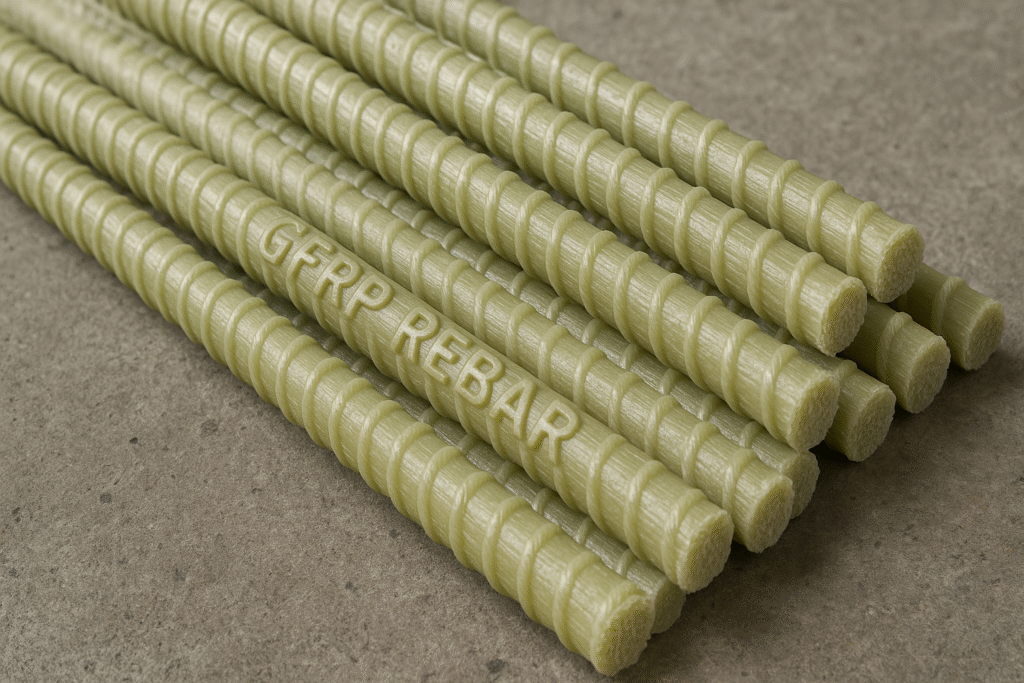
Pros of GFRP Rebars:
– Corrosion Resistance: Ideal for marine, chemical, and moist environments where steel would rust.
– Lightweight: Significantly easier to handle and transport, reducing labor costs.
– High Strength-to-Weight Ratio: Offers tensile strengths comparable to or greater than steel.
– Non-Magnetic and Non-Conductive: Suitable for sensitive environments like hospitals, data centers, and communication towers.
– Durability: Extends the lifecycle of structures by resisting degradation over time.
– Sustainability: Lower carbon footprint in production compared to steel.
Cons of GFRP Rebars
– Brittle Failure: GFRP fails suddenly without yielding, requiring careful design and safety considerations.
– Handling Sensitivity: Requires specific care on-site to avoid damage during cutting or bending.
– Fire Performance: GFRP can degrade at high temperatures, necessitating additional fire protection measures.
– Limited Codes and Standards: Building codes are still evolving to embrace GFRP for widespread structural applications.
– Limited Indian Codes and Standards: Indian Codes & standards for Building design are still evolving to embrace GFRP for widespread structural applications.
When to Use GFRP Rebars
Ideal for structures exposed to corrosive environments, long-span bridges, and critical infrastructure demanding durability and low maintenance.