
Introduction
Selecting the right reinforcement material is crucial for the success and durability of any construction project. Glass Fiber Reinforced Polymer (GFRP) rebars are increasingly competing with traditional Thermo-Mechanically Treated (TMT) steel bars, each offering distinct advantages and considerations.
Strength and Performance
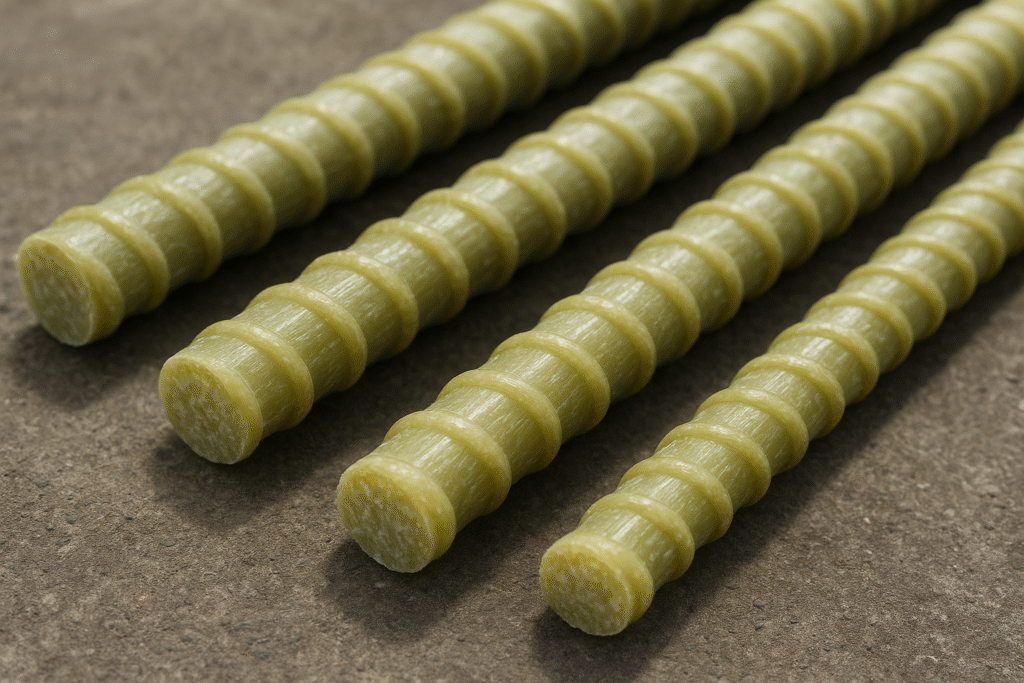
– GFRP Rebar: High tensile strength with excellent corrosion resistance, lightweight for easy handling.
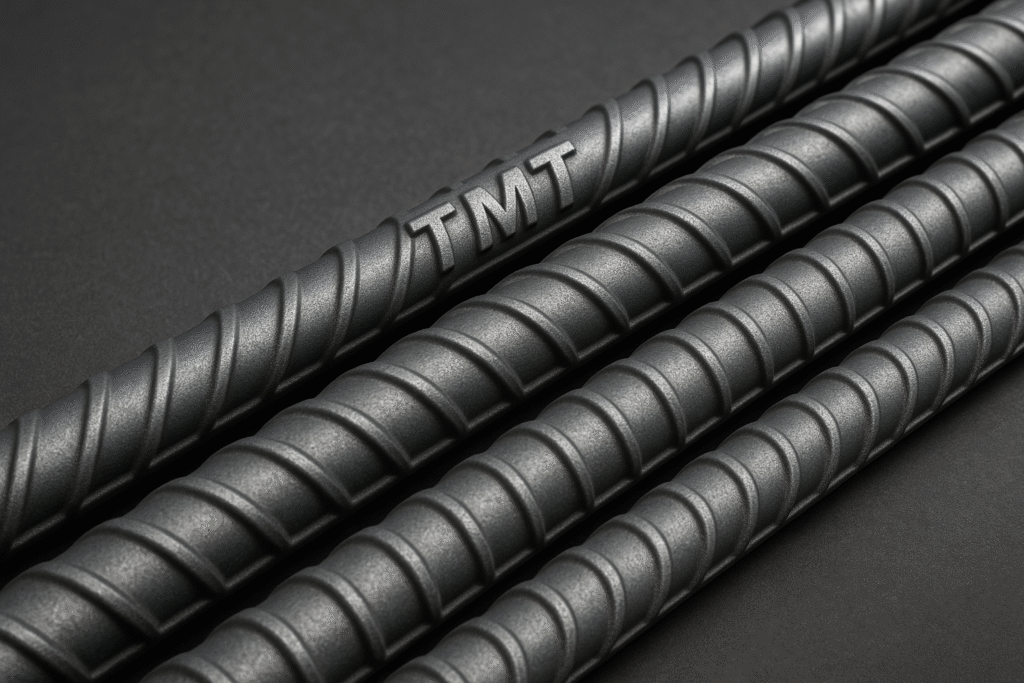
– TMT Rebar: High yield strength with ductility and gradual deformation before failure, widely used for general concrete reinforcement.
Durability and Corrosion Resistance
– GFRP rebars do not corrode, ideal for marine, chemical, and saline environments.
– TMT rebars are susceptible to rust, which can compromise structural integrity over time.
Installation and Handling
– GFRP bars are lighter, reducing labor and transportation costs but require careful handling to avoid brittle failure.
– TMT bars are heavier but familiar to construction teams and offer flexibility during bending and tying.
Cost and Lifecycle Considerations
– GFRP rebars have a Lower cost upfront as well as Zero maintenance requiring virtually no corrosion-related repairs.
– TMT rebars are higher in cost and may also incur higher long-term costs due to corrosion and repair needs.
Which to Choose?
– For corrosion-prone environments, GFRP is the preferred choice.
– Hybrid approaches combining both may optimize cost and performance.